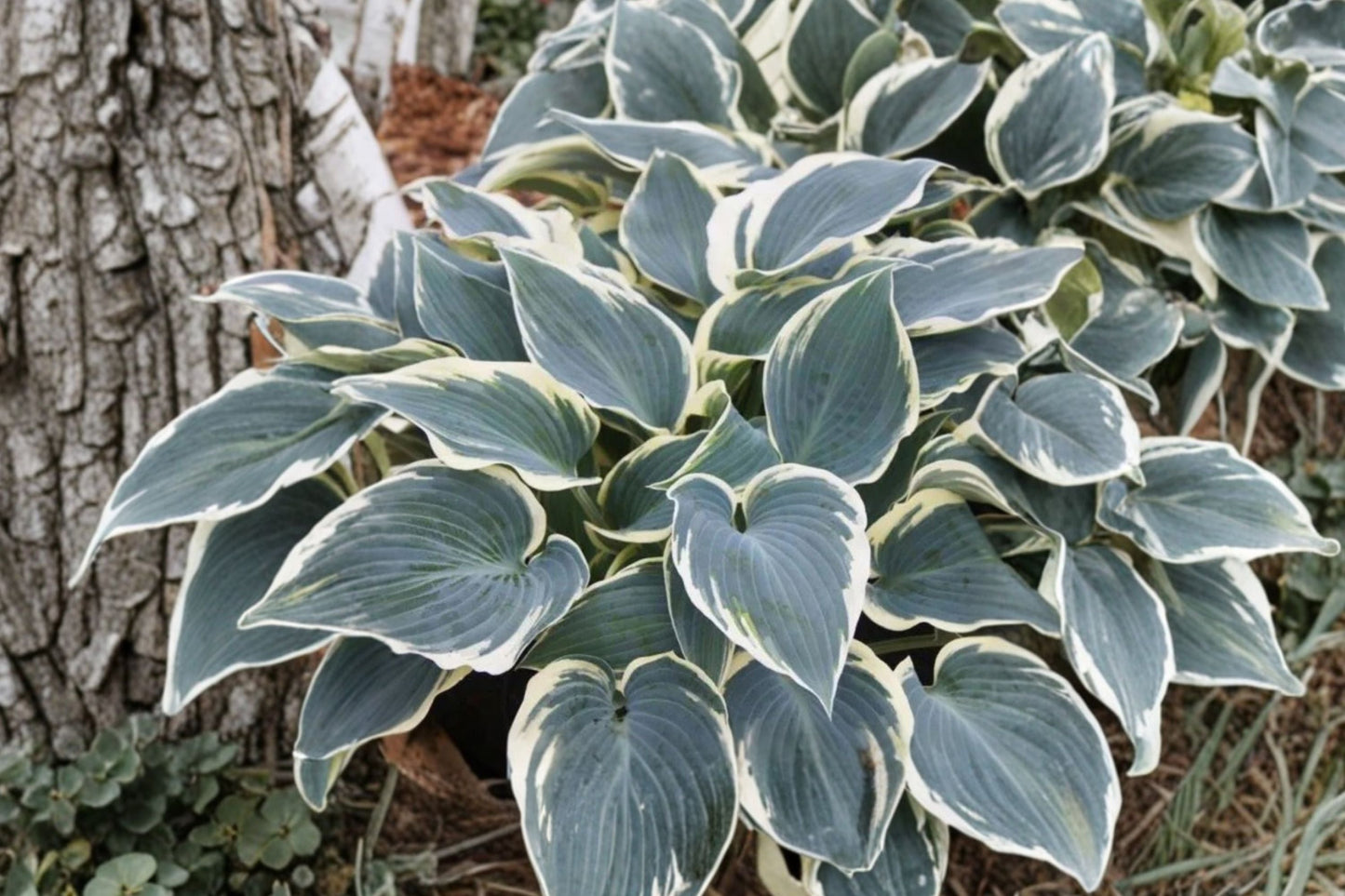
Hosta Plantain Lily ‘El Niño’ Bareroot | Blue Variegated Foliage | Slug Resistant Perennial | Hosta Plant
Hosta Plantain Lily ‘El Niño’ Bareroot | Blue Variegated Foliage | Slug Resistant Perennial | Hosta Plant
Couldn't load pickup availability
Bring elegant color and texture to shaded garden spaces with Hosta ‘El Niño’, a stunning medium-sized variegated hosta prized for its thick blue-green leaves edged in crisp ivory-white margins. A sport of the beloved ‘Halcyon’ hosta, this award-winning perennial adds cool-toned contrast and lush structure to woodland gardens, shaded borders, and container plantings.
Its heavily textured leaves are not only beautiful but also more resistant to slug damage than many other hostas, making it a favorite among shade gardeners looking for low-maintenance foliage plants.
🌟 Why Gardeners Love Hosta ‘El Niño’
- 💙 Distinctive blue-green foliage with bright white margins
- 🌿 Thick leaves help resist slug damage
- 🌸 Lavender blooms appear in midsummer
- 🌳 Thrives in shade and woodland gardens
- 🪴 Excellent for containers and borders
- 🦋 Pollinator-friendly perennial
- ❄️ Extremely cold hardy and easy to grow
🌱 Plant Details
Common Name: Variegated Plantain Lily
Scientific Name: Hosta ‘El Niño’
Sunlight: Partial Shade to Full Shade
Watering: Moderate
Soil: Rich, moist, well-draining soil
Hardiness Zones: 3–9
Growth Habit: Mounded, Clumping
Format: Bareroot
🌿 Perfect Garden Uses
✔ Shade gardens
✔ Woodland gardens
✔ Foundation plantings
✔ Border edging
✔ Container gardens
✔ Understory planting
✔ Groundcover mass plantings
✔ Cottage gardens
🌸 Companion Plants
Pairs beautifully with:
- Heuchera ‘Plum Pudding’
- Brunnera ‘Jack Frost’
- Japanese Painted Fern
- Astilbe
- Pulmonaria
- Bleeding Heart
- Coral Bells
These shade-loving companions create rich texture and color contrast in woodland landscapes.
🌱 Care Tips
- Plant in rich, organically amended soil
- Keep soil consistently moist but not soggy
- Mulch around the base to retain moisture
- Morning sun enhances foliage color
- Remove spent flower stalks after blooming
- Divide mature clumps every 3–5 years
Share