Ponytail Palm Live Plant – 1 Plant in 5-Inch Pot – Beaucarnea recurvata
Ponytail Palm Live Plant – 1 Plant in 5-Inch Pot – Beaucarnea recurvata
Couldn't load pickup availability
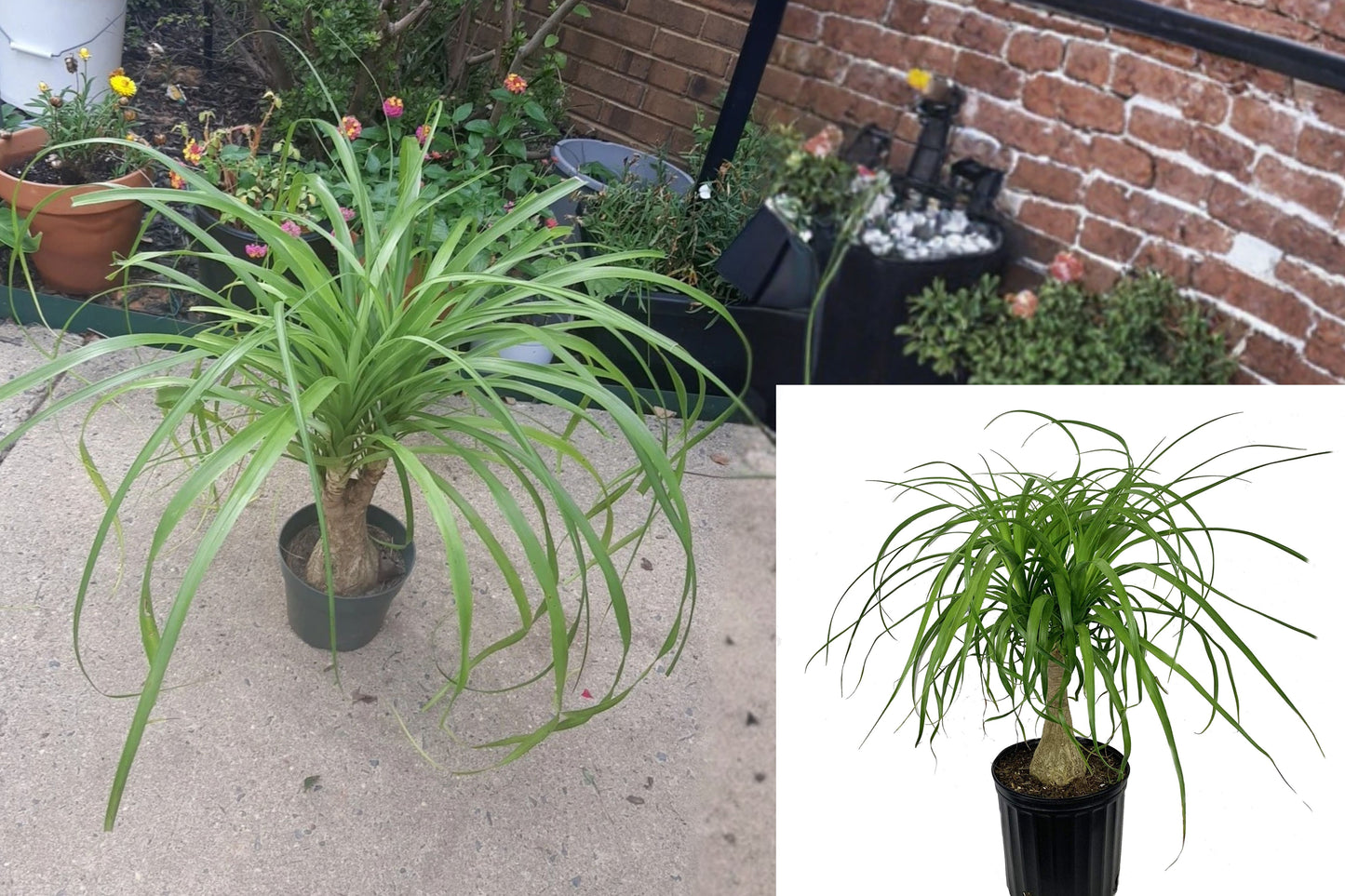
The Ponytail Palm (Beaucarnea recurvata) is a distinctive, low-maintenance houseplant recognized for its swollen trunk base and long, narrow green foliage. Despite its common name, it is not a true palm and is well suited to indoor plant collections.
This listing includes one live Ponytail Palm in a 5-inch pot. The seller states that the plant is over 18 inches tall, and the exact plant pictured will be shipped. Natural variation and minor leaf loss can occur during transportation, particularly during warm weather.
Shipping Size: Over 18 inches tall in a 5-inch pot.
Plant Condition: Live, potted plant.
Important Note:
You will receive a live starter plant (seedling/young plant). Listing photos show the plant at a mature stage for reference only. The actual plant size, shape, and appearance may vary and will be significantly smaller than the images shown.
Plant Condition Disclosure:
Live plants may be shipped dormant, leafless, recently pruned, bare root, or partially defoliated depending on season, weather, and shipping requirements.
Natural variation in size, branching, foliage density, color, root structure, and overall appearance should be expected.
Customer Notice:
Live plants may experience normal shipping stress such as leaf loss, yellowing, wilting, or minor branch damage.
Please consider local weather before purchasing. Extreme heat, freezing temperatures, severe weather, shipping delays, or unattended packages may increase plant stress.
Due to the perishable nature of live plants, returns are generally not accepted. If there is an issue with your order, please contact us within 48 hours of delivery and provide the required photos for review.
If there is an issue with your order, contact us within 48 hours of delivery and provide:
- Photos of the shipping box
- Photo of the shipping label
- Clear photos of the plant from multiple angles
- Scratch test photos if the plant appears dead or dormant
Dormant, stressed, defoliated, wilted, or transit-shocked plants are not automatically considered dead.
Claims submitted without required photos may not be eligible for review.
Claims submitted more than 48 hours after delivery will be considered accepted as received and may not be eligible for replacement or refund.
🔹 BULLET POINTS:
- Live Ponytail Palm: One healthy live Beaucarnea recurvata plant.
- Shipping Size: Over 18 inches tall in a 5-inch pot.
- Potted Plant: Ships established in a 5-inch pot.
- Indoor Use: A distinctive ornamental houseplant suitable for indoor spaces.
- Appearance: Long, narrow green foliage and a characteristic swollen trunk base.
- Natural Variation: The exact plant pictured will be shipped; minor leaf loss from shipping stress may occur.
🧾 MATERIALS:
- 1 live Ponytail Palm plant
- 5-inch nursery pot
- Rooted/potted plant
📋 ATTRIBUTES:
Common Name: Ponytail Palm
Scientific Name: Beaucarnea recurvata
Plant Type: Houseplant / Succulent-like ornamental
Life Cycle: Perennial
Flower/Fruit Color: Not provided
Sunlight: Bright light; specific seller requirement not provided
Soil: Not provided
Water: Not provided
USDA Zone: Not provided
Plant Form: Potted live plant
Pot Size: 5 inches
Shipping Size: Over 18 inches tall
Quantity: 1 plant
Foliage: Green, narrow leaves
❓ FAQ:
1. Is this a live Ponytail Palm?
Yes. This listing is for one live, potted Ponytail Palm (Beaucarnea recurvata).
2. What size Ponytail Palm will I receive?
The seller states that the plant is over 18 inches tall and arrives in a 5-inch pot.
3. Is the Ponytail Palm suitable for containers?
Yes. The listed plant is already growing in a 5-inch pot, making it suitable for continued container growing.
4. What type of growth habit does Ponytail Palm have?
Ponytail Palm has an upright ornamental growth habit with a distinctive swollen trunk base and long, narrow foliage.
5. Can the plant lose leaves during shipping?
Yes. The seller notes that some leaves may be lost because of shipping stress and summer heat. The plant may recover after acclimating to its new environment.
Share